DFM & Engineering Review for CNC & Sheet Metal Parts
Identify Manufacturing Risks Before They Become Production Problems.
Before production begins, PURESPEC provides Design for Manufacturability (DFM) review for CNC machined parts, sheet metal components, finished parts, and assemblies.
Our goal is simple: identify potential manufacturing issues early, clarify requirements before they reach the production floor, and help move your project into production with fewer surprises.
Upload Your Drawings →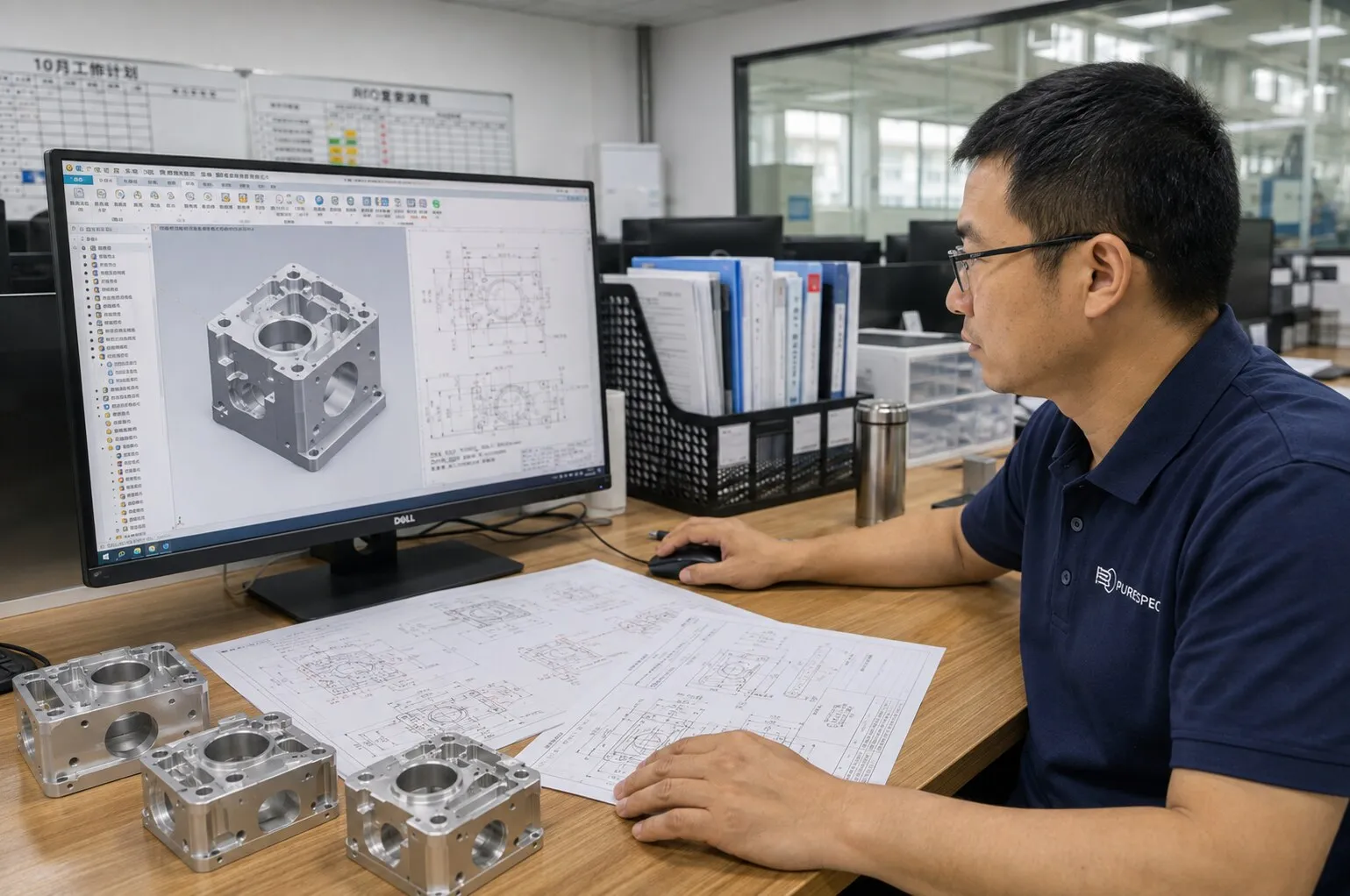
Manufacturability risks identified before production
Critical tolerances & functional features reviewed
Practical manufacturing recommendations where needed



Manufacturing Starts Before the Machine Runs
A Design for Manufacturability review evaluates how your part geometry, tolerances, materials, finishes, and functional requirements translate into real-world production.
Tool access, material behavior, tolerances, wall thickness, bend geometry, surface finishing, critical interfaces, and inspection requirements can all affect how reliably and efficiently a part can be manufactured.
PURESPEC reviews these requirements before production planning to identify potential risks, clarify unclear specifications, and discuss practical manufacturing options where appropriate.
Our role is not to change your product or design intent. It is to bring a manufacturing perspective into the project before the design reaches the production floor.
Better manufacturing starts with clearer requirements.
What We Review Before Manufacturing
Our DFM review focuses on the factors most likely to affect manufacturability, consistency, cost, and lead time.
Geometry & Manufacturing Access
We review part geometry, feature orientation, tool access, internal corners, pockets, cavities, thin walls, holes, and other features that may affect machining or forming.
Tolerances & Critical Features
Critical dimensions, tolerances, datums, mating features, and functional interfaces are reviewed against the intended manufacturing and inspection approach.
Materials
Material grade, thickness, availability, machinability, forming behavior, and application requirements are considered when evaluating manufacturing feasibility.
Surface Finishing
We consider how anodizing, plating, coating, polishing, blasting, and other finishes may affect dimensions, cosmetic surfaces, masking requirements, and critical interfaces.
Assembly & Functional Interfaces
For parts used in assemblies, we review mating features, alignment, fasteners, joining requirements, and critical interfaces that may influence final fit or function.
Production Practicality
Quantity, setup requirements, fixturing, process sequence, manufacturing complexity, and inspection needs are considered when evaluating a practical production approach.
DFM Considerations by Manufacturing Process
Different manufacturing processes create different design constraints. Our review focuses on the considerations that matter to the way your part will actually be made.
CNC Machining DFM Review
For CNC machined parts, our engineering review may consider:
- Tool access and machining reach
- Internal corner radii
- Deep pockets and cavities
- Thin walls and part rigidity
- Hole diameter and depth
- Threads and machining access
- Setup and fixturing considerations
- Datum and critical feature relationships
- Tight tolerance requirements
- Material machinability
- Surface finish implications
The question is not only whether a part can be machined, but whether it can be manufactured reliably and practically against the agreed requirements.
Sheet Metal DFM Review
For custom sheet metal parts, our review may consider:
- Material type and thickness
- Bend radius and bend geometry
- Hole-to-edge relationships
- Hole-to-bend relationships
- Forming and tooling access
- Complex formed features
- Welding and assembly access
- Hardware installation requirements
- Dimensional considerations after forming
- Surface finishing requirements
Finishing & Assembly Review
For finished parts and assemblies, additional considerations may include:
- Coating or plating thickness
- Masking requirements
- Critical mating surfaces
- Cosmetic surface requirements
- Joining and fastening access
- Assembly orientation
- Interface dimensions
- Packaging and surface protection
Small Details Can Create Large Manufacturing Problems
A feature that looks simple on a drawing can affect tooling, setup, dimensional stability, finishing, inspection, or final assembly.
DFM helps identify these issues before they become production problems.
| Drawing Requirement | Potential Manufacturing Risk | Engineering Discussion |
|---|---|---|
| Very small internal corner radius | May require smaller tools and increase machining time | Can a larger radius meet the functional requirement? |
| Deep, narrow pocket | Tool reach and rigidity may affect machining stability | Can geometry or machining access be improved? |
| Tight tolerances across multiple features | May increase setup and inspection complexity | Which dimensions are functionally critical? |
| Coating on a precision mating surface | Finish thickness may affect final fit | Should the surface be masked or final dimensions controlled after finishing? |
| Thin-wall geometry | Machining or forming may cause deformation | Can wall thickness or manufacturing sequence be adjusted? |
The objective is not to simplify every design. It is to distinguish what the product truly requires from complexity that may create unnecessary manufacturing risk.
Clearer Requirements Before Production
Depending on the complexity and requirements of your project, our DFM & Engineering Review may include:
Manufacturability Comments
Potential manufacturing concerns identified during drawing and requirement review.
Requirement Clarifications
Questions regarding tolerances, materials, finishes, critical dimensions, interfaces, or inspection expectations.
Manufacturing Recommendations
Practical alternatives may be suggested where a feature could affect manufacturability, consistency, cost, or lead time.
Confirmed Production Requirements
Key requirements are clarified before quotation or production planning so manufacturing and inspection work from an agreed understanding.
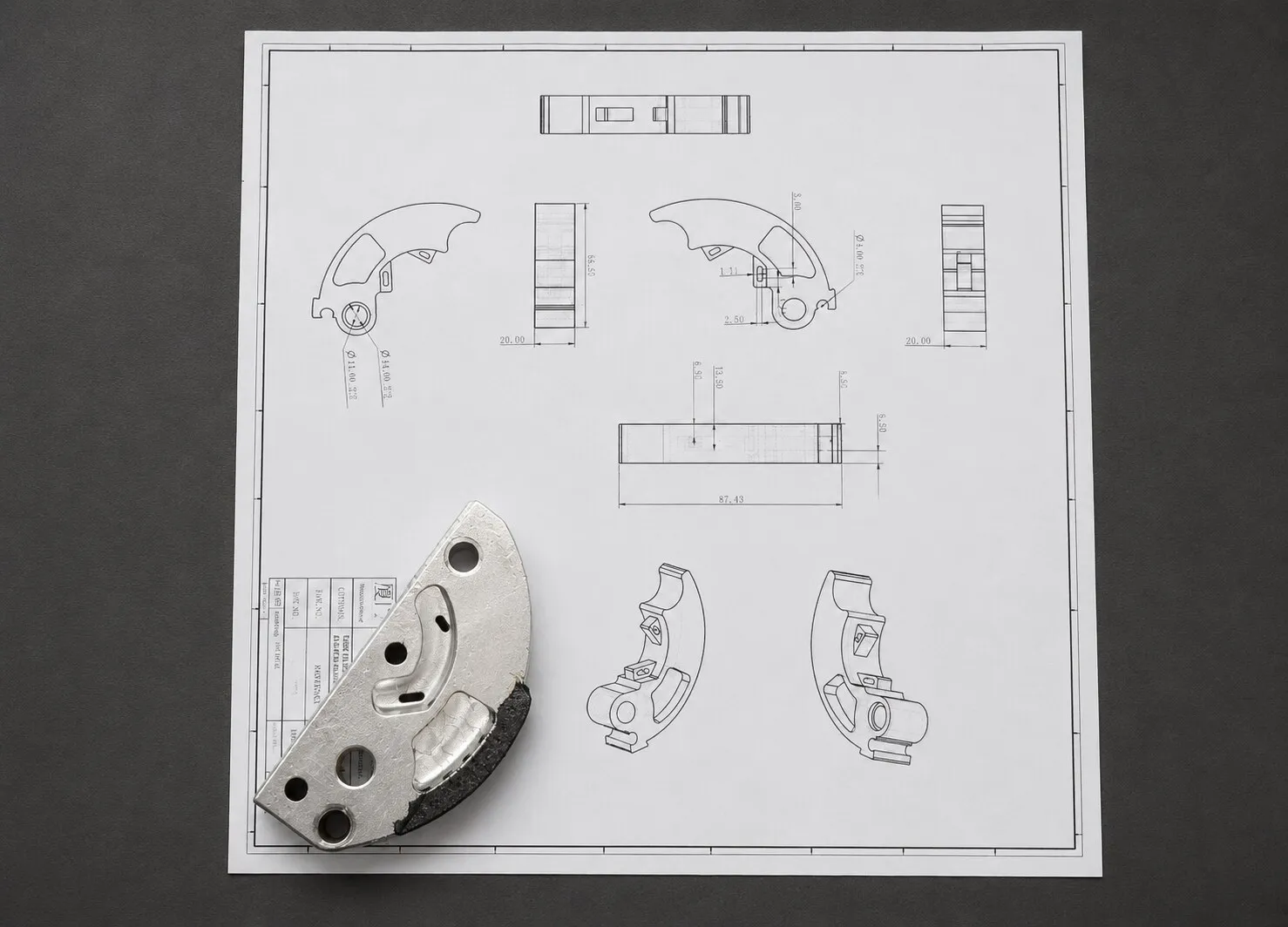
Recommendations are discussed with the customer before implementation. Final design authority remains with the customer.
Engineering Review Before Production. Quality Control During Production
DFM & Engineering Review
Before Production
Can this part be manufactured reliably against the intended requirements?
We review drawings, geometry, materials, tolerances, finishes, critical features, and manufacturing considerations before production.

Quality Control & Inspection
During & After Production
Does the manufactured part meet the agreed requirements?
Inspection and quality controls are applied according to the drawing, project requirements, and agreed quality plan.
Explore Our Quality Control →What We Need From You
The more clearly we understand your application and requirements, the more useful our manufacturing feedback can be.
Please provide, where available:
3D CAD Files
STEP, STP or other commonly used 3D CAD formats.
2D Technical Drawings
Including dimensions, tolerances, GD&T, critical features, and notes where applicable.
Material & Quantity
Specify material grade, required quantity, and expected production volume where known.
Surface Finish
Anodizing, plating, coating, polishing, blasting, or other finishing requirements.
Functional Requirements
Identify critical dimensions, mating surfaces, assembly interfaces, or other features important to part function.
Quality & Documentation Requirements
Specify inspection, material certification, reporting, labeling, or other documentation requirements where applicable.
Not every project requires an extensive engineering review. For straightforward parts, the process may simply confirm that the drawing and requirements are ready for quotation and manufacturing.
Frequently Asked Questions
What is a DFM review?
A Design for Manufacturability (DFM) review evaluates a component from a manufacturing perspective before production. It helps identify potential issues involving geometry, tolerances, materials, tool access, finishing, assembly, and other manufacturing requirements.
When should I request a DFM review?
DFM review is particularly useful for new parts, complex geometries, tight tolerances, new materials, finished assemblies, or projects being transferred to a new manufacturing supplier.
Does PURESPEC change my design?
No design change is implemented without customer approval. Where appropriate, we may suggest manufacturing-oriented alternatives and explain the reason for the recommendation. Final design authority remains with the customer.
Do you provide DFM review for both CNC machining and sheet metal parts?
Yes. Our DFM & Engineering Review supports CNC machined components, custom sheet metal parts, surface-finished components, and integrated assemblies according to individual project requirements.
Can DFM help reduce manufacturing cost?
In some cases, yes. Features such as unnecessarily tight tolerances, difficult tool access, complex setups, or finishing requirements can increase manufacturing cost. Where we identify such issues, practical alternatives may be discussed without compromising the intended function of the part.
What is the difference between DFM review and quality inspection?
DFM focuses on manufacturability and requirement clarity before production. Quality inspection verifies whether manufactured parts conform to the agreed drawing and project requirements during and after production.
Have a Part Ready for Manufacturing?
Send us your drawings and project requirements.
PURESPEC will review the manufacturing requirements, identify questions or potential risks where necessary, and help prepare your project for quotation and production.
Upload Drawings & Get a Quote