
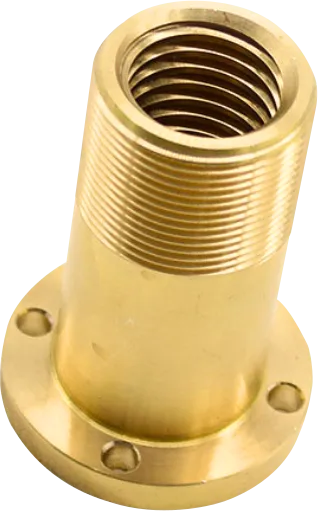
Copper & Brass CNC Machining
Copper & Brass CNC Machining for Conductive Precision Components
CNC machining services for copper and brass parts used in electrical, thermal, and precision mechanical applications.
Copper and brass are commonly used where electrical conductivity, thermal performance, and precise dimensional control are required.
Get a QuoteWhy Choose Copper & Brass
Engineering precision and material versatility for high-performance applications.
Electrical Efficiency
High electrical conductivity for power transmission and electrical contact systems (especially copper).
Thermal Management
Excellent thermal conductivity for heat transfer components and thermal interfaces.
Good Machinability in Suitable Brass Grades
Suitable brass grades, such as free-cutting brass, generally offer good machinability with stable chip formation and reduced tool wear.
Low Friction Properties
Low friction behavior suitable for sliding, sealing, and precision-fit assemblies.
Dimensional Stability
High dimensional precision achievable in brass due to better rigidity vs copper.
System Integration
Suitable for compact functional components in electrical, hydraulic, and instrumentation systems.






Common Copper & Brass Grades
Copper (C110 / C101)
High-purity copper with excellent electrical and thermal conductivity but relatively soft structure.
Brass (C360 Free Cutting)
Free-machining brass with excellent chip breaking and high CNC efficiency.
Naval Brass (C464)
Zinc-tin modified brass with improved corrosion resistance in marine and fluid environments.
Copper & Brass Grade Comparison
| Grade / Material | Machinability | Relative Mechanical Strength | Electrical Conductivity | Surface Stability / Oxidation Behavior | Cost |
|---|---|---|---|---|---|
| Copper (C110) | Low to Moderate | Low to Medium | Very High | May oxidize over time; surface protection may be needed for contact performance | $$$ |
| Copper (C101) | Low | Low to Medium | Very High | High-purity copper; oxidation control may be required depending on application | $$$$ |
| Brass (C360 Free Cutting) | Very High | Medium | Moderate | Better surface stability than copper in many general environments | $$ |
| Naval Brass (C464) | High | Medium | Moderate | Improved corrosion resistance in marine or humid environments | $$$ |
Surface Protection Considerations
Unlike structural steels, copper and brass do not rely primarily on surface coatings for basic survival performance. Instead, finishing selection is driven by functional requirements such as conductivity, oxidation control, wear resistance, and appearance stability.
Copper may oxidize naturally over time, while brass generally offers better inherent corrosion resistance. In electrical applications, surface treatments must also consider potential impacts on conductivity and contact performance.
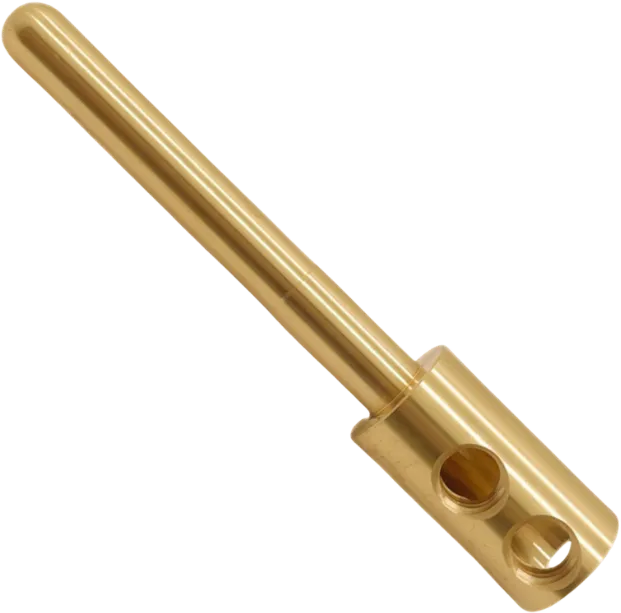
Compatible Surface Finishes
Surface finish selection for copper and brass is typically determined by electrical performance requirements, oxidation control needs, and mechanical interface conditions.
| Finish Type | Primary Purpose | Engineering Function | Typical Use Context |
|---|---|---|---|
| Nickel Plating | Wear resistance + corrosion stability | Provides protective barrier; may slightly reduce conductivity depending on thickness | Electrical connectors, precision mechanical interfaces |
| Tin Plating | Stable electrical interface layer | Maintains good conductivity and solderability | Electrical terminals, conductive components, PCB-related parts |
| Gold Plating | Stable electrical contact performance where specified, with corrosion resistance support | Can help support low contact resistance and electrical interface stability depending on plating specification and application requirements | Precision connectors, electrical contacts, low-contact-resistance interfaces |
| Clear Coating | Oxidation control + visual protection | Helps reduce surface oxidation without major dimensional change; may reduce conductivity on functional contact surfaces | Decorative brass parts, non-electrical components |
| Mechanical Polishing | Surface refinement + friction reduction | Improves surface smoothness and does not add a coating layer; contact performance should be reviewed for functional surfaces | Precision fittings, decorative or low-friction components |
Grade Selection Guidelines
If you are unsure which grade to specify, start from the property the part depends on. Below are practical selection guidelines based on typical engineering use cases:
Copper (C110 / C101)
Conditions:
- Electrical conductivity is a functional requirement
- Thermal transfer efficiency is critical in system design
- Lower mechanical strength is acceptable
- Surface protection can be specified where oxidation matters
Typical use: busbars, electrical terminals, heat spreaders, conductive connectors.
Brass (C360 Free Cutting)
Conditions:
- Machining efficiency is the priority
- Threaded or fine features are required
- Cost efficiency matters across a batch
- Moderate conductivity is sufficient
Typical use: precision fittings, threaded components, valves, electrical housings.
Naval Brass (C464)
Conditions:
- Marine, humid or fluid-exposed service is expected
- Corrosion resistance beyond standard brass is required
- Good machinability is still wanted
Typical use: pump components, marine fittings, corrosion-resistant mechanical parts.
CNC Machining & Engineering Considerations
Machining Behavior
Copper exhibits high ductility, leading to long, continuous chips and increased tool adhesion risk. Brass, especially C360, produces short, well-broken chips that significantly improve machining stability. Tool wear is generally higher in copper due to material stickiness and heat concentration at the cutting edge.
Process & Manufacturing Impact
Copper's high thermal conductivity dissipates heat quickly into the workpiece, which may create dimensional control challenges in thin or heat-sensitive geometries. Brass maintains more stable cutting conditions and is easier to control in high-speed CNC operations. Surface finish quality can be easier to control in suitable brass grades due to more consistent chip evacuation.
Production & Tolerance Considerations
Copper parts are more prone to deformation during clamping and post-machining stress release. Fixture design must distribute clamping force carefully. Brass provides better dimensional stability, making it more suitable for tight-tolerance threaded or sealing features. Copper requires additional allowance for spring-back and soft material movement during finishing.



Typical Applications
- Electrical connectors and terminals
- Power distribution components (busbars, contact interfaces)
- Thermal management components (heat spreaders, interfaces)
- Valves and fluid control components
- Precision fittings and threaded inserts
- Instrumentation and measurement system parts
- Decorative functional hardware (brass)
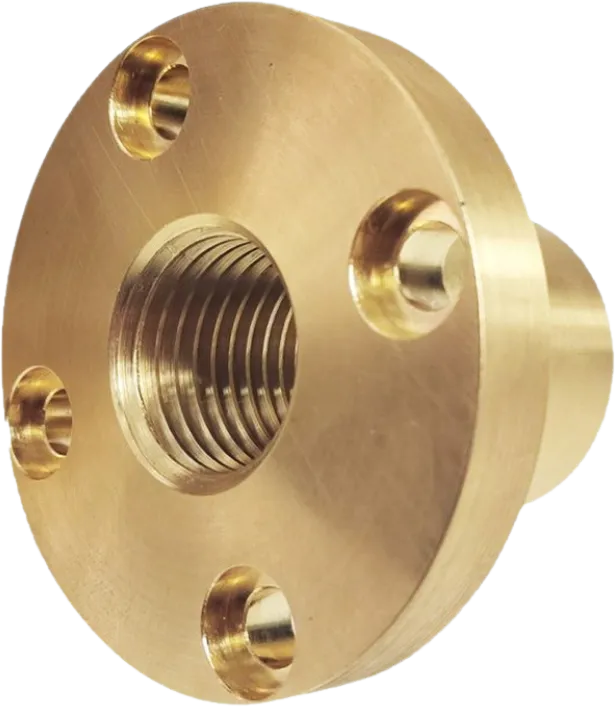
Material Selection Framework
When Copper & Brass Is a Good Choice
- Electrical conductivity is a functional requirement
- Precision CNC-machined connectors or interfaces are needed
- Low friction or sliding contact components are required
- Thermal transfer efficiency is critical in system design
When to Avoid Copper & Brass
- Structural load-bearing components
- High-strength mechanical frames or supports
- Lightweight optimization is a primary design constraint (consider aluminum instead)
Engineering Trade-offs
- Conductivity vs mechanical strength (copper is weak structurally despite high conductivity)
- Machinability vs softness (copper deforms easily during machining)
- Corrosion resistance vs surface treatment dependency (both often require plating/coating)
Engineering Support
Copper and brass are widely used in electrical, thermal, and precision mechanical components, but require careful control of deformation and tool adhesion during machining.
Our engineering team can assist with:
Material Selection Guidance
Conductivity vs machinability optimization for electrical/mechanical systems.
Design for Manufacturability (DFM)
Deformation risk control for copper, thread stability in brass.
CNC Machining Feasibility
Chip control, tool wear prediction, cutting strategy.
Surface Finishing Recommendations
Anti-oxidation protection and conductivity preservation.
Production Planning Support
Batch sizing, machining efficiency, cost optimization strategies.






Frequently Asked Questions
What is the machinability difference between copper and brass?
Brass (especially C360) is significantly easier to machine due to short chip formation and lower tool adhesion, while copper is softer and more prone to deformation and long chip buildup.
Does copper oxidize during CNC machining use?
Yes. Copper rapidly forms an oxide layer when exposed to air, which can reduce surface conductivity unless protected by plating or coating.
How are brass and copper typically selected for different applications?
Brass is preferred for precision mechanical components like fittings and valves, while copper is used for electrical and thermal conductivity functions.
Is copper harder to machine than brass?
Yes. Copper is more difficult due to its ductility and tendency to stick to cutting tools, increasing tool wear and burr formation risk.
Are copper and brass used in structural parts?
Copper and brass are not typically selected for primary structural load-bearing components. Final suitability should be reviewed based on design, load, and application requirements.
Need Copper & Brass CNC Machined Components?
Whether you are evaluating material options, developing prototypes, or preparing for production, our team can help review component requirements and recommend suitable manufacturing solutions.
Get a Quote