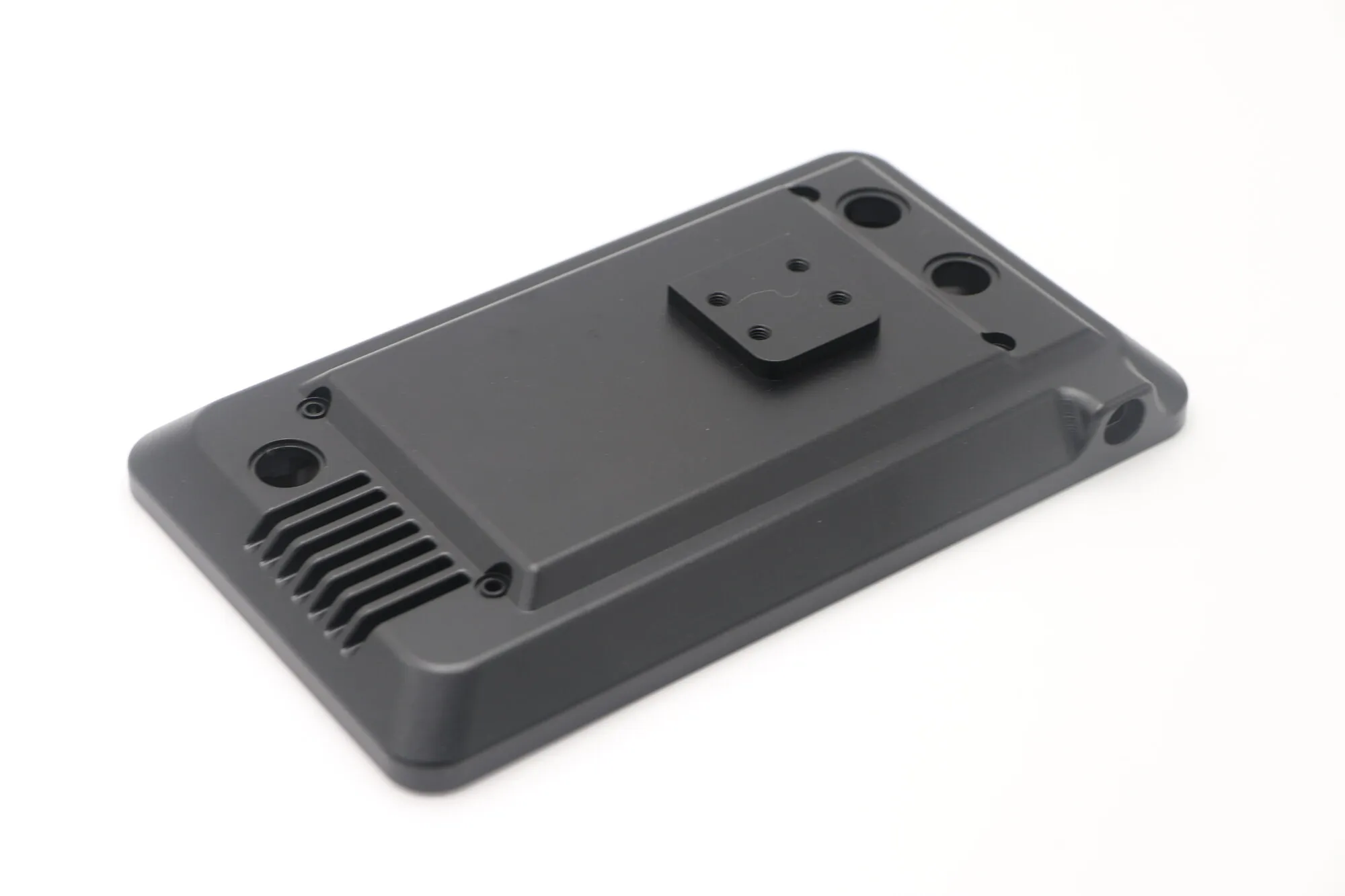
Vented enclosure body
Milled vent slots and a textured black anodize, with the sealing face masked.
Enclosure bodies, covers and instrument housings machined from solid or from extrusion — sealing faces, vent slots, cable ports and cosmetic anodized finishes on parts that end up visible in the product.
It has to seal, and it has to look right — and those pull in opposite directions. Sealing wants a flat, square, dimensionally tight face. Looking right wants a cosmetic finish, which means anodize or plating, which adds thickness to every surface including the one that has to seal and the threads that have to accept a screw.
So the useful conversation is about which surfaces are functional and which are cosmetic. Tell us where the gasket lands and which faces the customer sees, and we will machine to the finish rather than to the nominal, and mask what shouldn't be coated. Where a body and cover have to fit each other, we machine and finish them as a set for that reason.
Matched sets. The dimension that matters is not on either part on its own — it is the fit between them, after finishing.
Milled vent slots and a textured black anodize, with the sealing face masked.
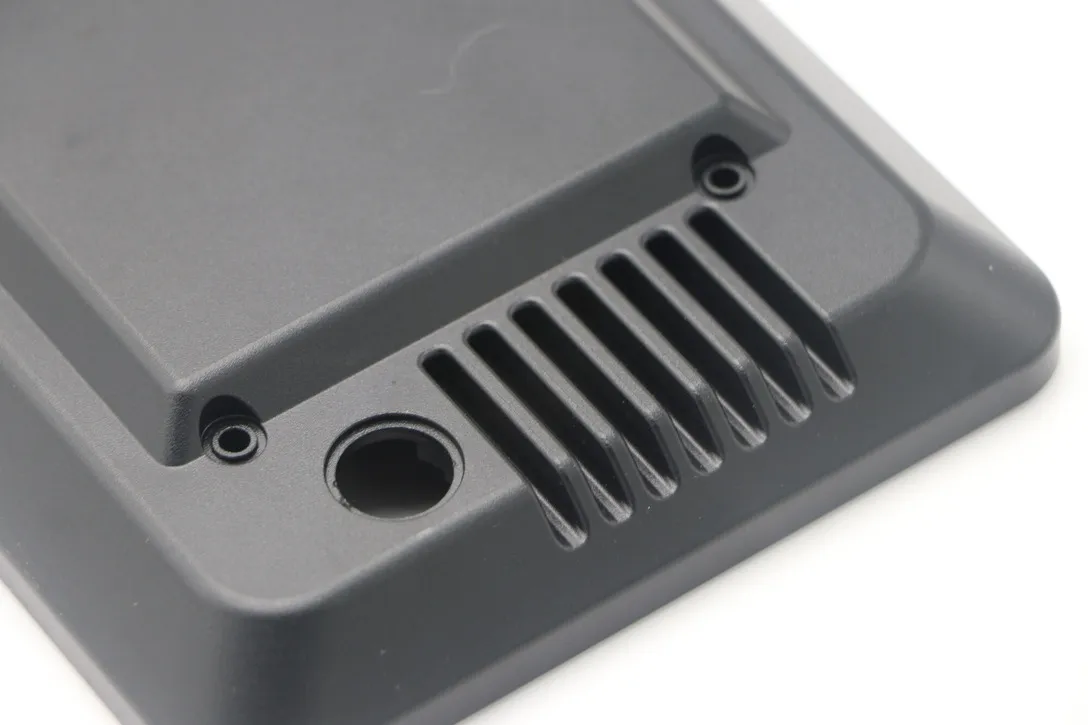
Slot edges and a raised sealing boss on the same face.
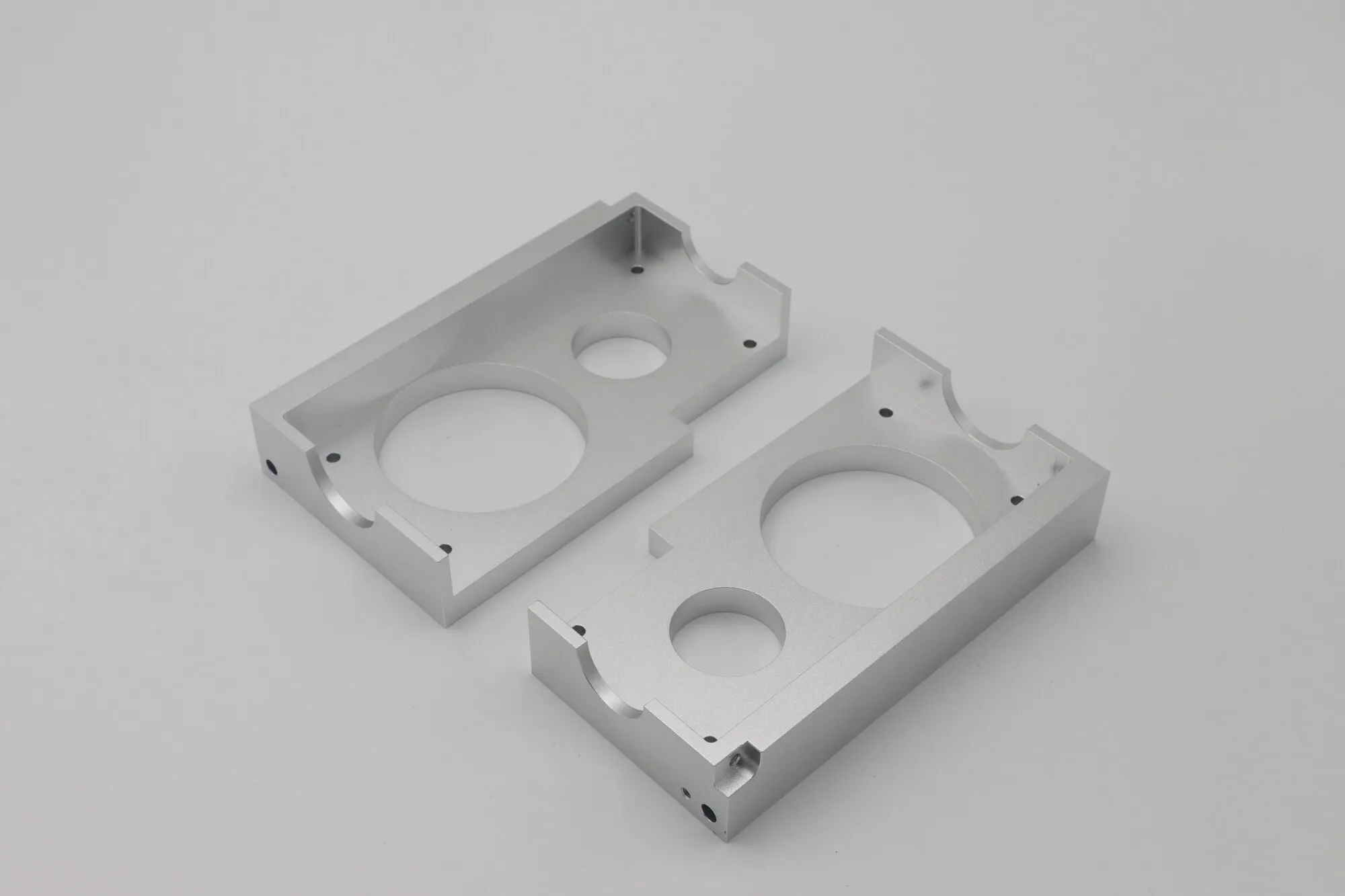
Two halves that meet on a machined face — cut as a matched pair.
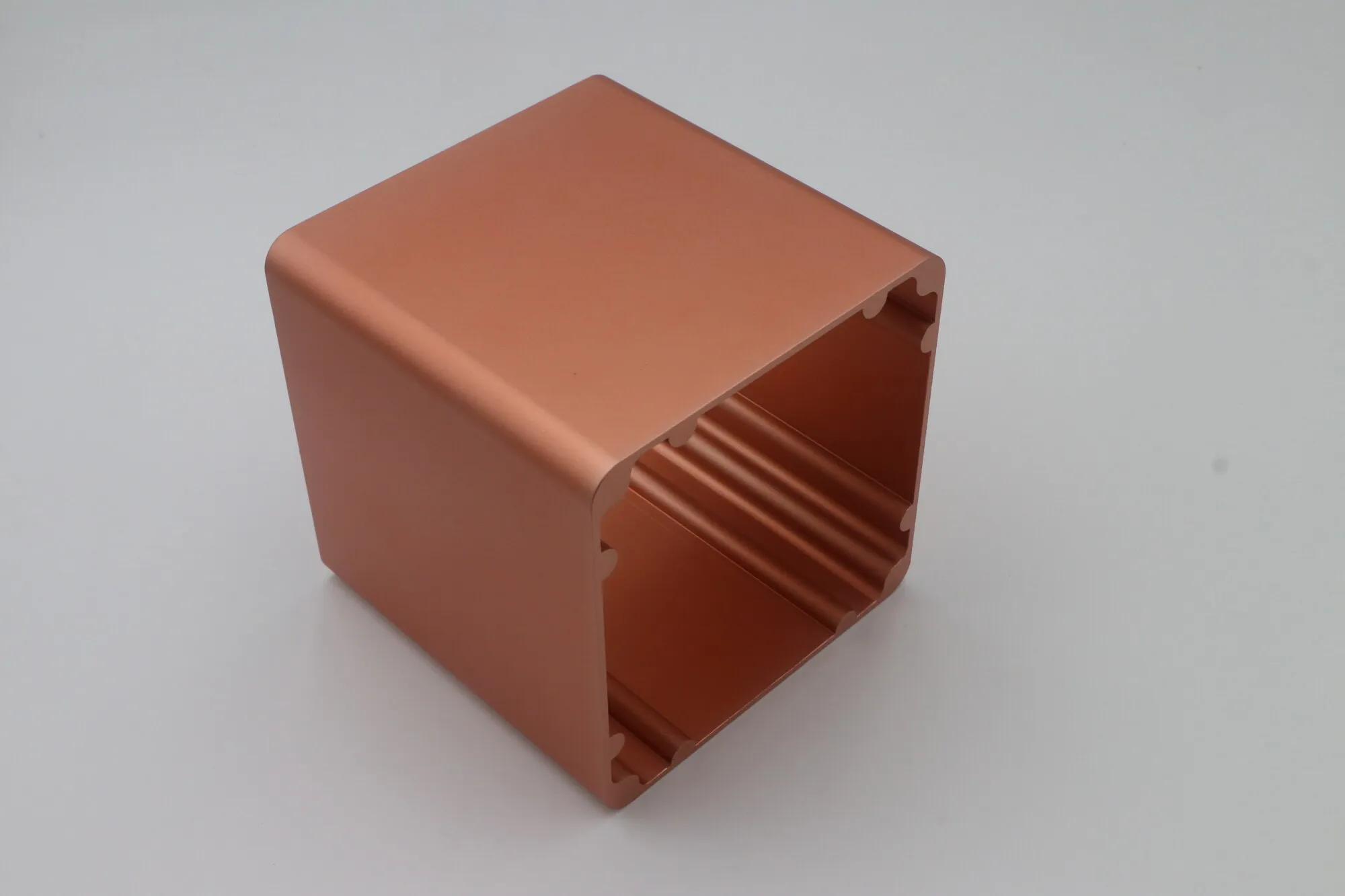
Machined from custom extrusion, which is cheaper than billet once volume justifies the die. The internal ribs are drawn in by the die; the ends and cut-outs are machined after.
Round and prismatic housings carrying bores, ports and mounting features that have to locate a mechanism inside them.
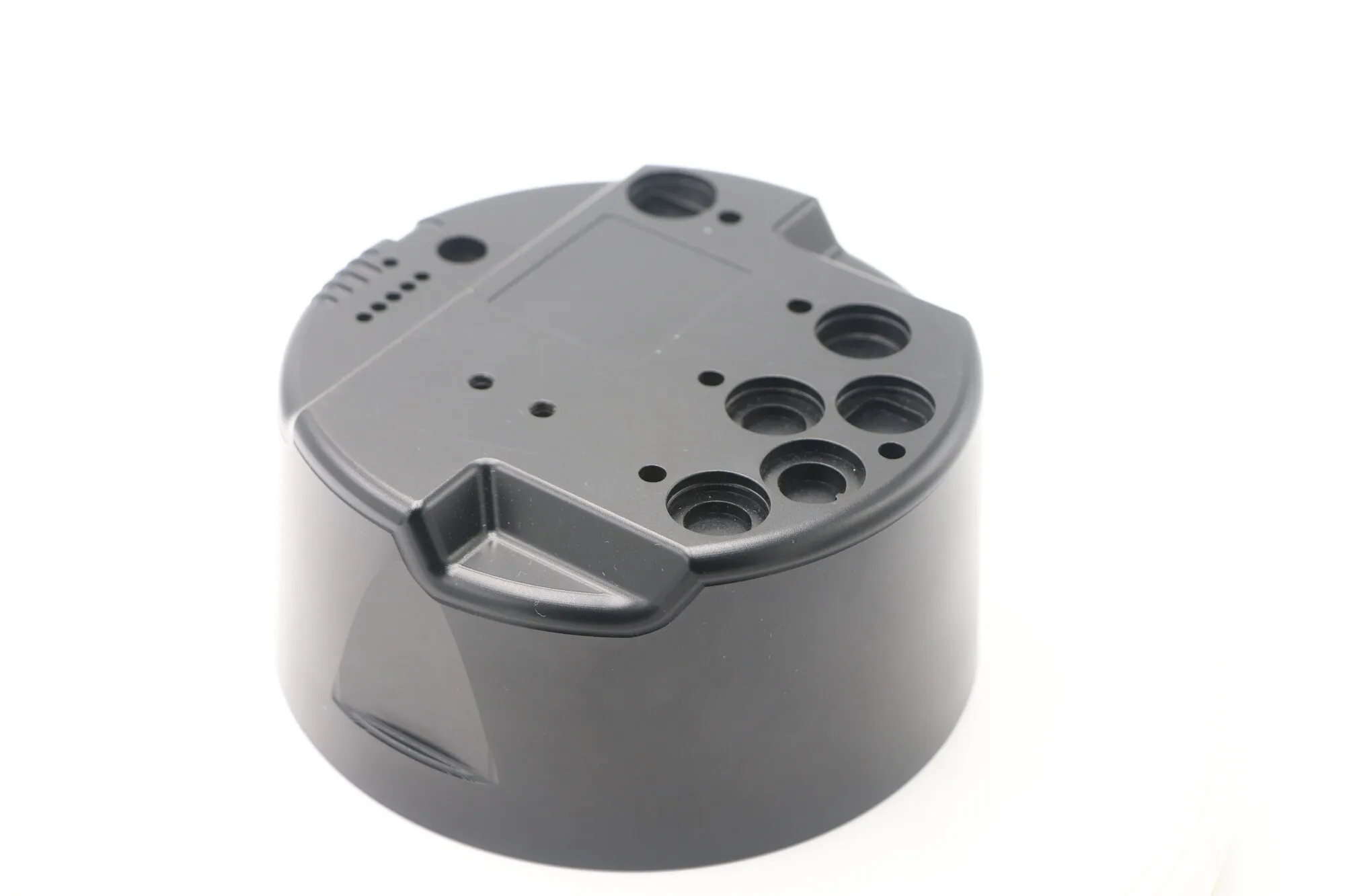
Counterbored ports and vent grooves on a curved cosmetic face, held square to the bore axis.
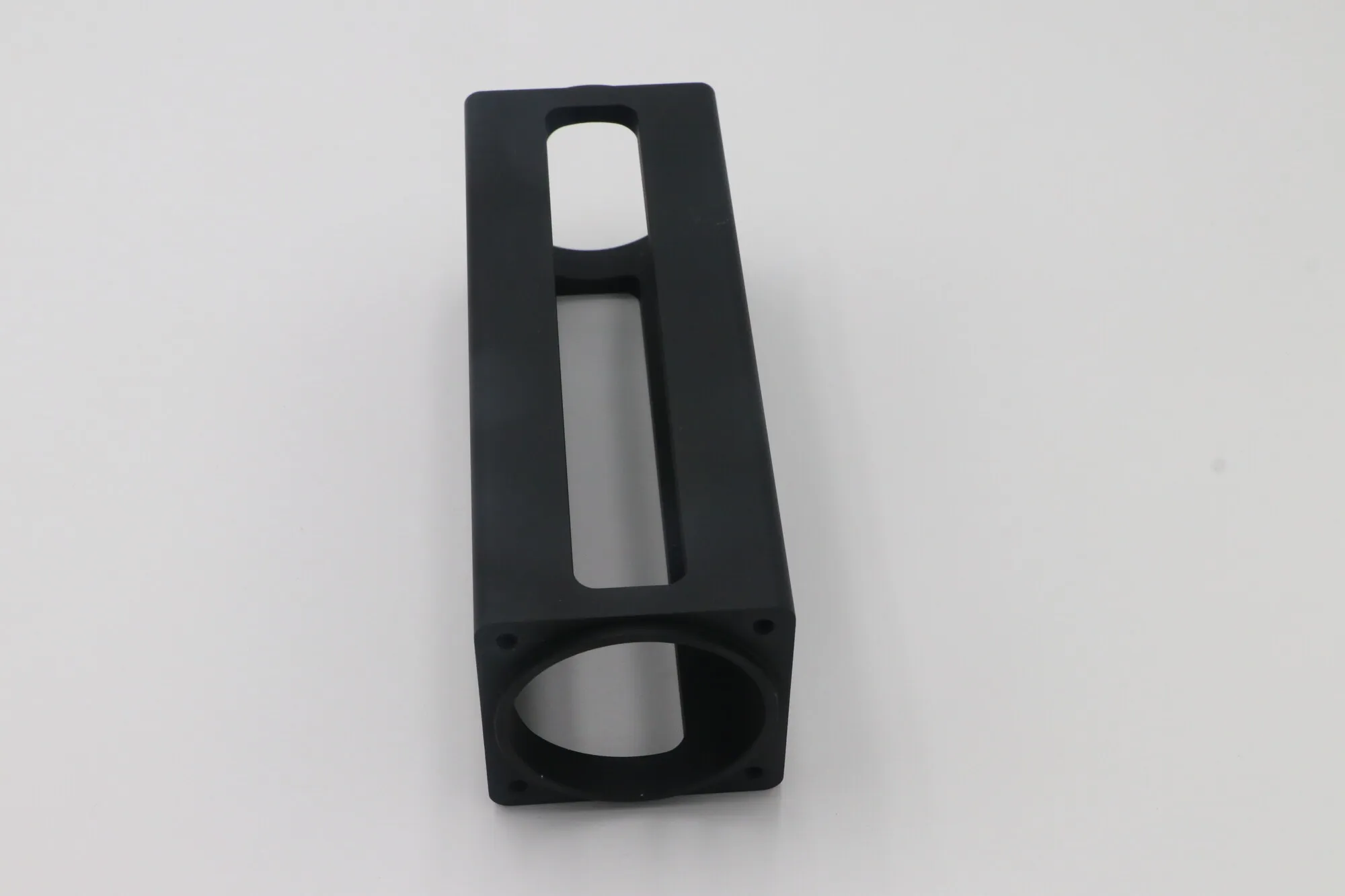
Windows milled through a thin tube wall without collapsing it.
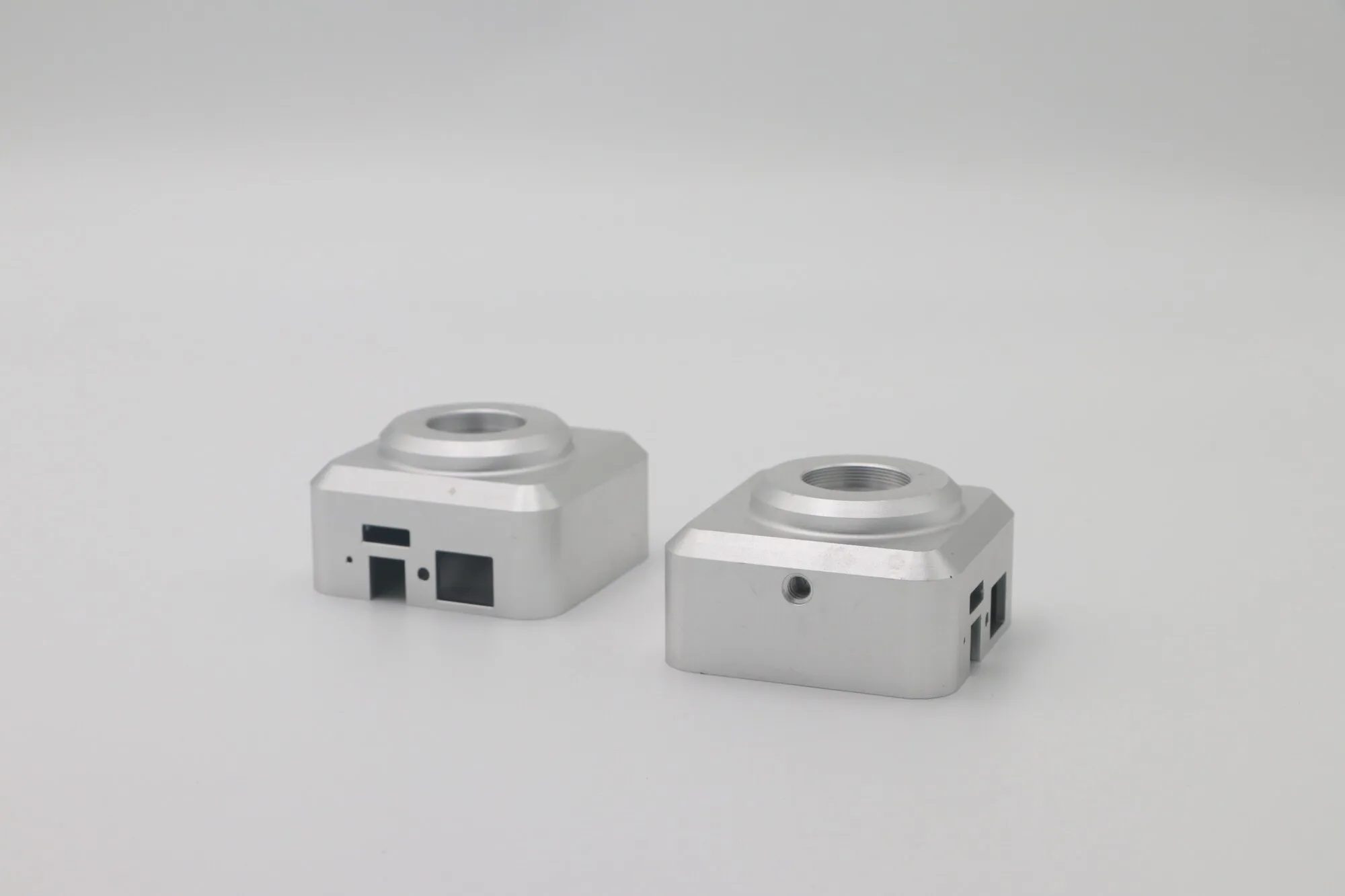
Small housings with a raised boss and cable aperture.
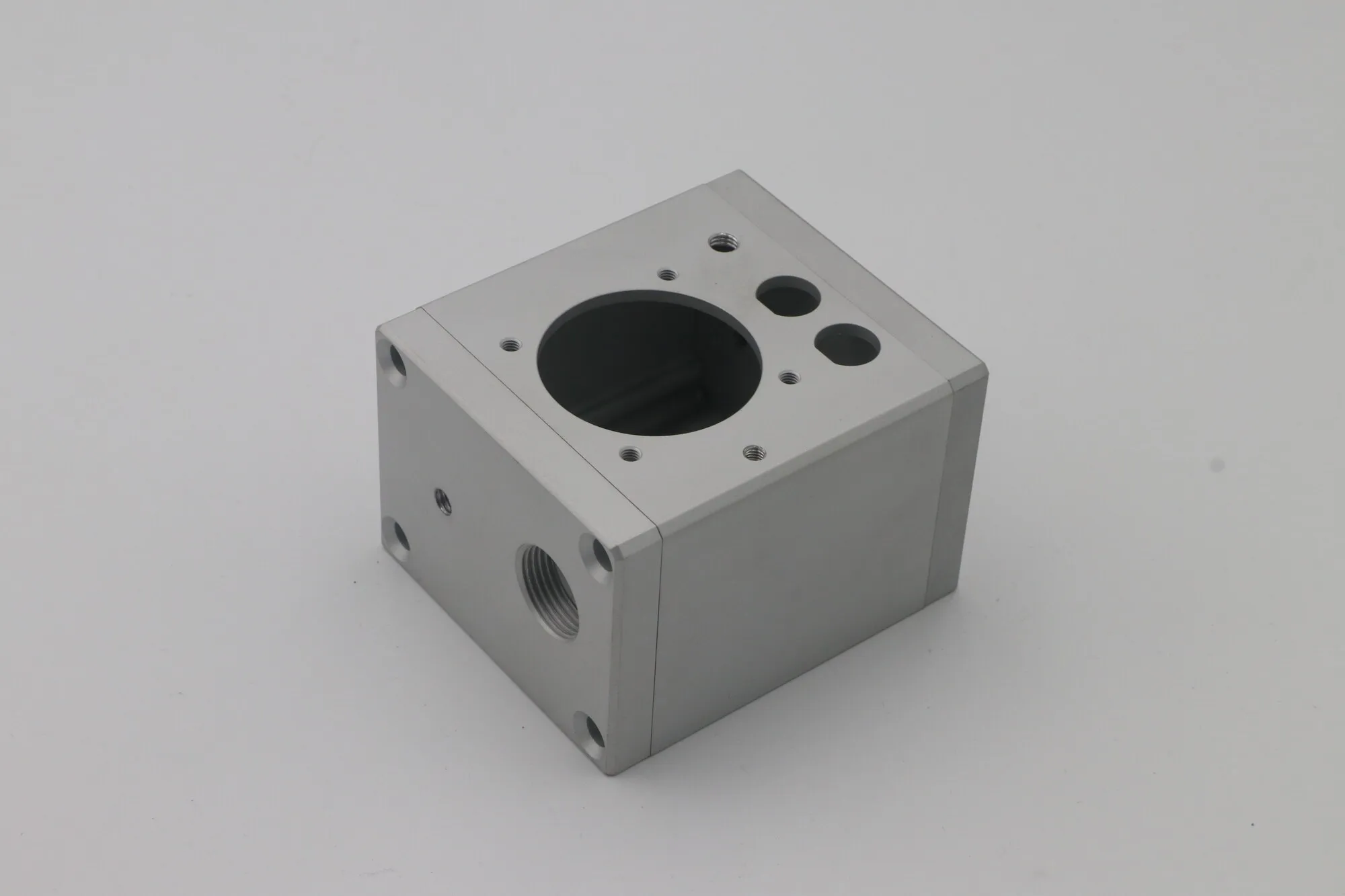
Machined from solid: large central bore plus threaded side ports.
Parts big enough that the turning and the milling have to be planned together, because neither operation can hold the other's tolerance on its own.
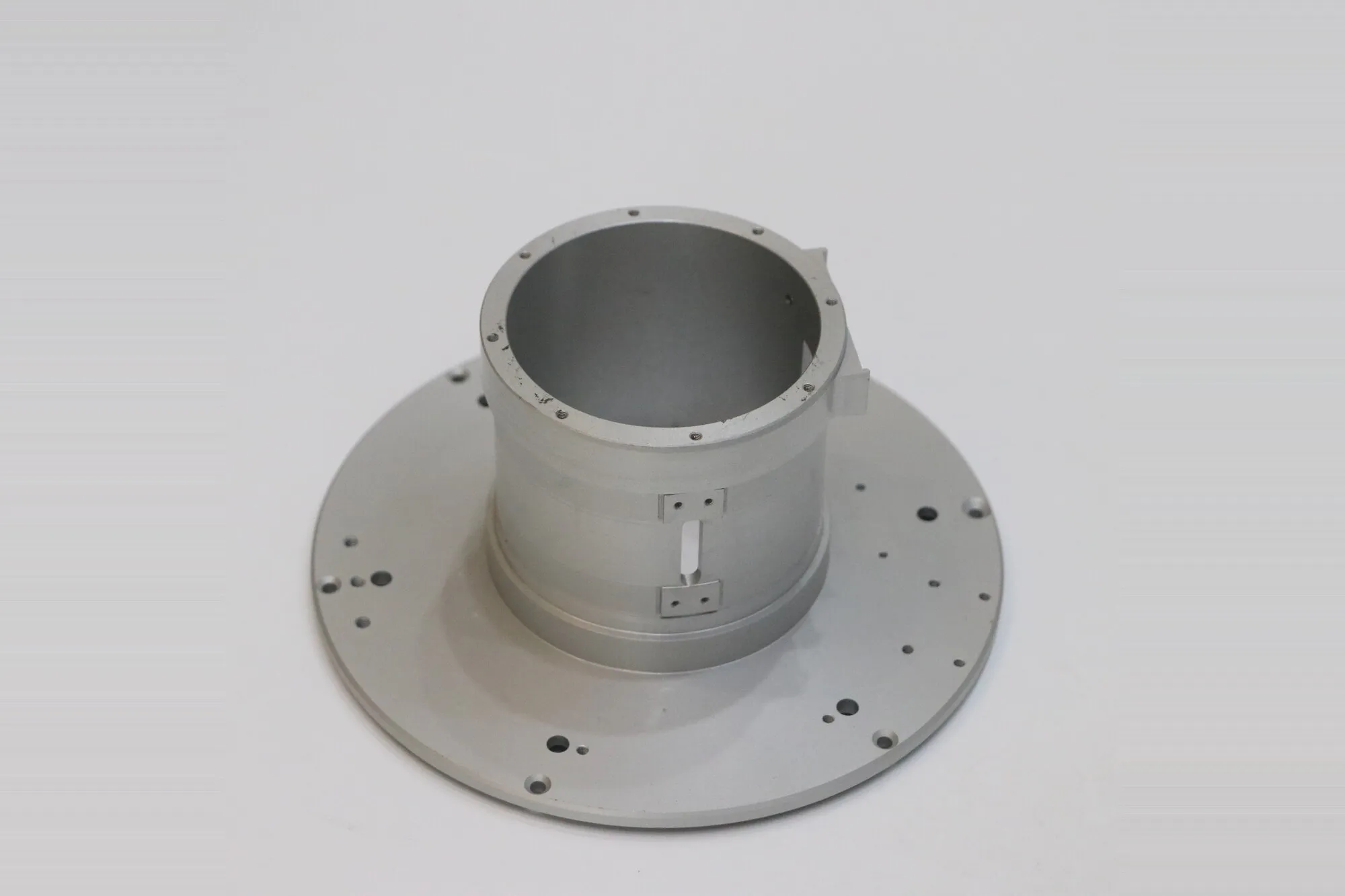
Turned bore and flange, then drilled and milled on the same reference.
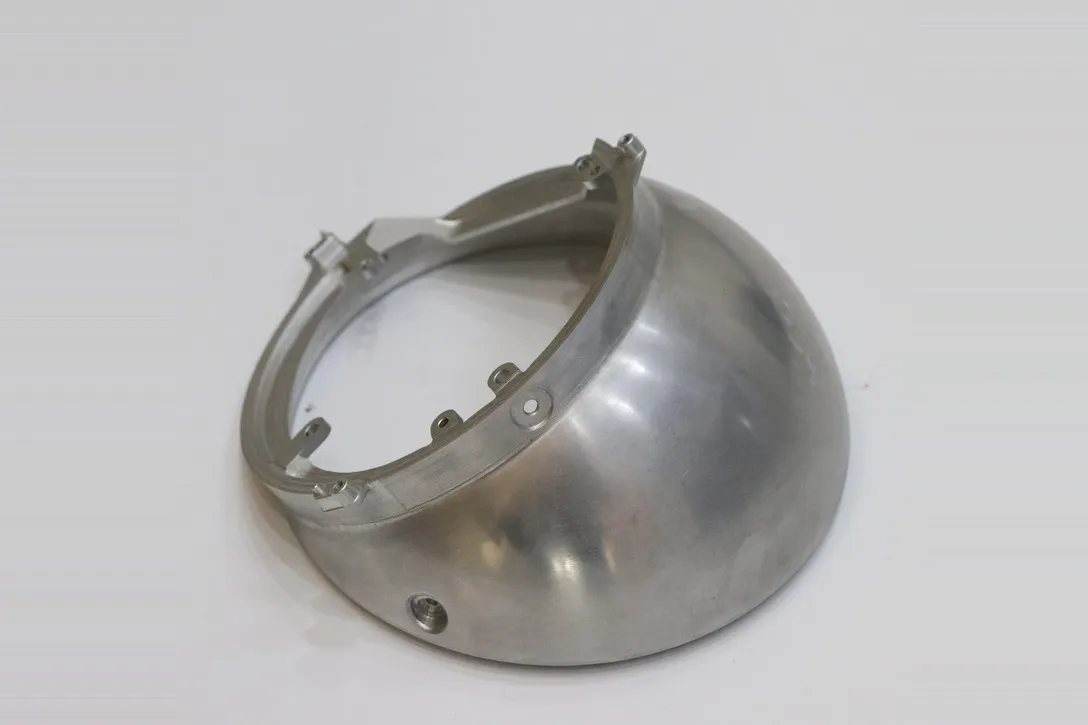
Curved shell with machined edge features and mounting tabs.
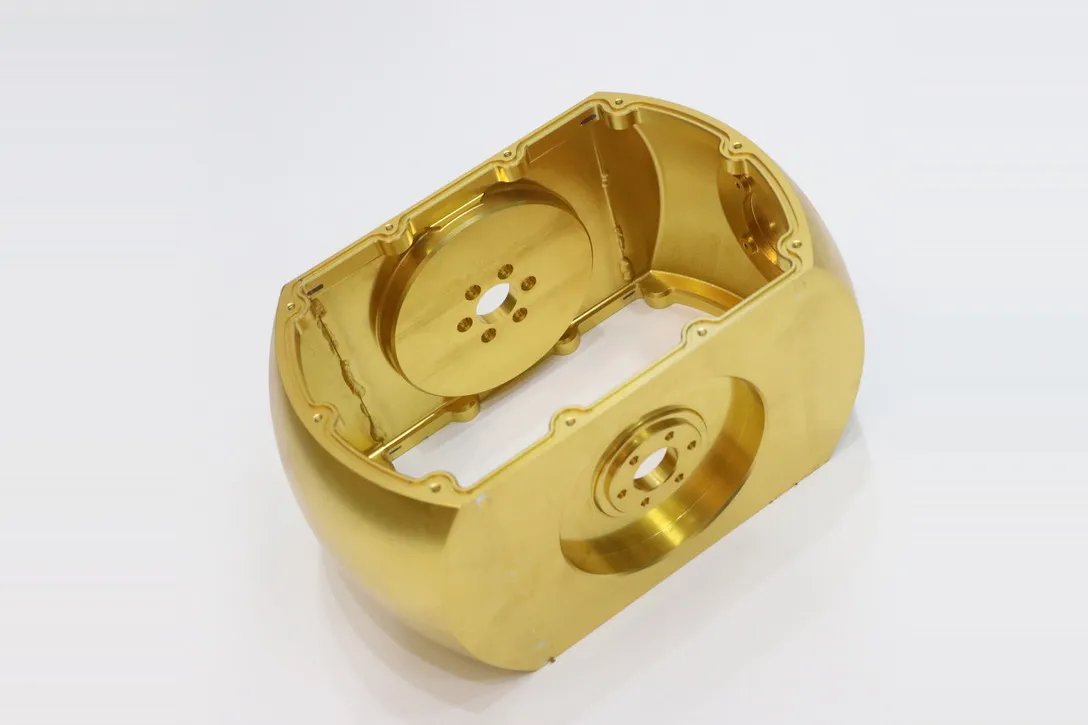
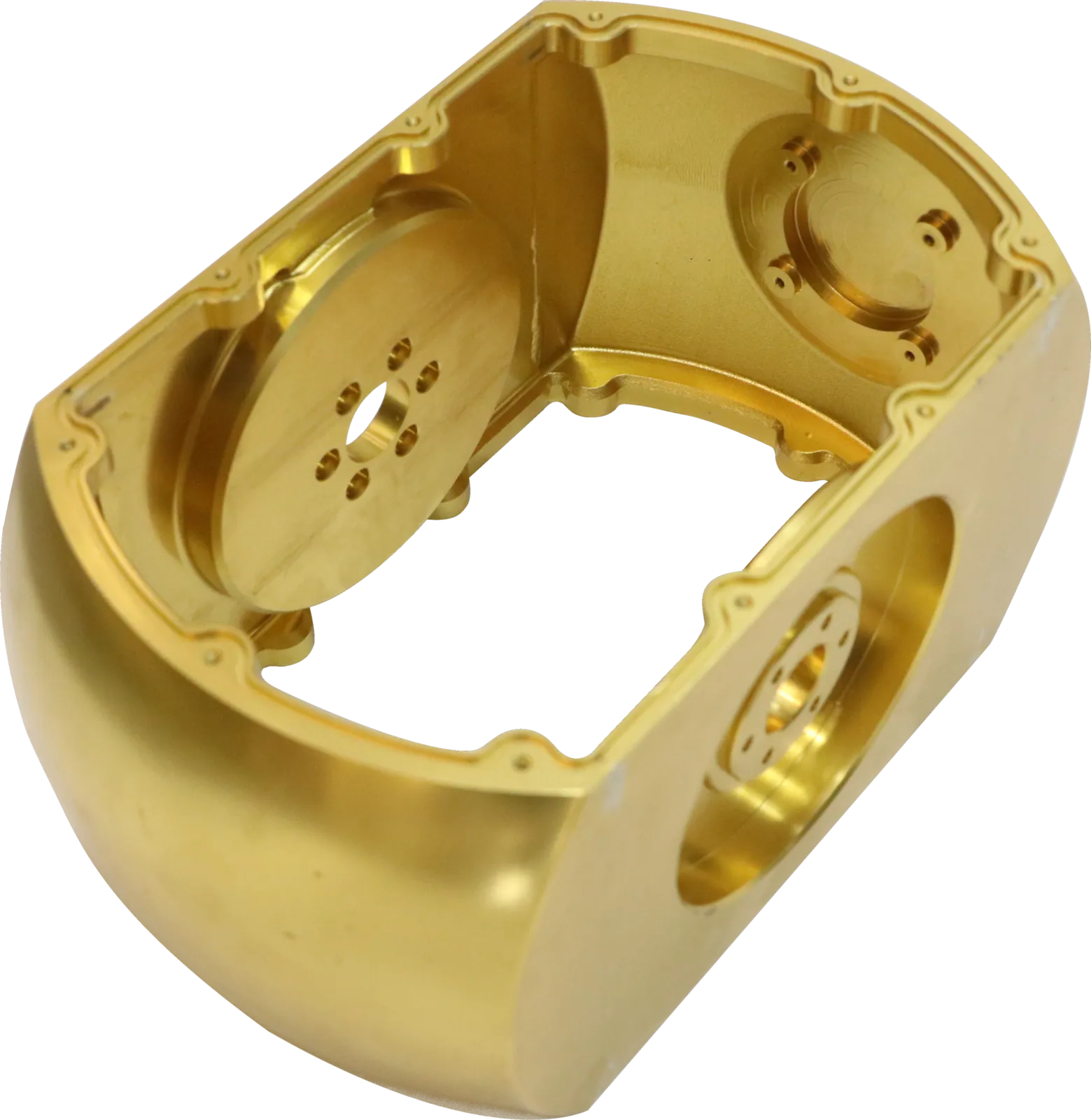
A cosmetic plated finish over machined internal bearing seats.
The figures that matter on an enclosure are mostly about the relationship between two parts, not either one alone.
Mating sets are machined and finished together, so the fit is established after coating rather than before it.
Flatness held across the gasket path, and the face masked from anodize where the specification requires bare metal.
Uniform anodize across curved and flat faces, with racking points placed where they will not be seen in the assembly.
Tapped holes are cut to accept the fastener after the finish is applied, or masked — decided per hole, not per part.
If your enclosure has an IP rating to meet, say so at enquiry: it changes how we treat the sealing face, the fastener holes and the cable entries, and it is far cheaper to design for than to retrofit.
Yes, and we machine and finish them as a set rather than as two separate line items. The reason is that the critical dimension is the fit between the two parts after coating: anodize adds thickness to both mating faces, so two parts each individually within tolerance can still end up with a gap or an interference. Quoting them as a set costs a little more in handling and removes that failure mode.
By masking, or by machining to the post-finish dimension — decided feature by feature. Anodizing grows every exposed surface by roughly 5–25 µm, which on a gasket land or a tapped hole is significant. Mark on the drawing which faces must be bare metal and which dimensions are to be met after finishing. If nothing is marked we will ask, because guessing here produces parts that measure correctly and still do not assemble.
It depends on volume and cross-section. Machining from billet has no tooling cost and suits prototypes and low volumes, but you pay for every gram removed. A custom extrusion carries a die cost up front and then produces the cross-section almost free, so it wins once quantities justify it — and it can include internal ribs and channels that would be expensive to mill. Tell us your annual volume and we will cost both routes.
We can machine to a sealing design that supports one, but the rating belongs to the finished assembly, not to a machined part — it depends on the gasket, the fasteners, the cable entries and how it is assembled. Tell us the target rating at enquiry and we will review the sealing face, fastener spacing and entry details against it, and flag anything in the design that will not achieve it.
By deciding early which faces are visible in the finished product, then protecting them through the process — planning racking points where the marks will be hidden, and handling and packing to avoid the scuffs that happen after machining rather than during it. Mark the cosmetic faces on your drawing. Parts where every surface is treated as cosmetic cost more than parts where the two that matter are identified.
Type II and Type III anodizing in a range of colors, chromate conversion coating, powder coating, plating and bead-blast textures. The parts on this page show black textured anodize, color anodize on extruded shells, and a gold plated cosmetic finish. Our surface finishing pages cover the processes in more detail, including which ones are compatible with which alloys.
Send your drawing or STEP file with the material, quantity, which faces are cosmetic, where the seal lands, and any IP rating you need to meet. We will review it and come back with a quotation.
Get a Quote