Natural Hardcoat
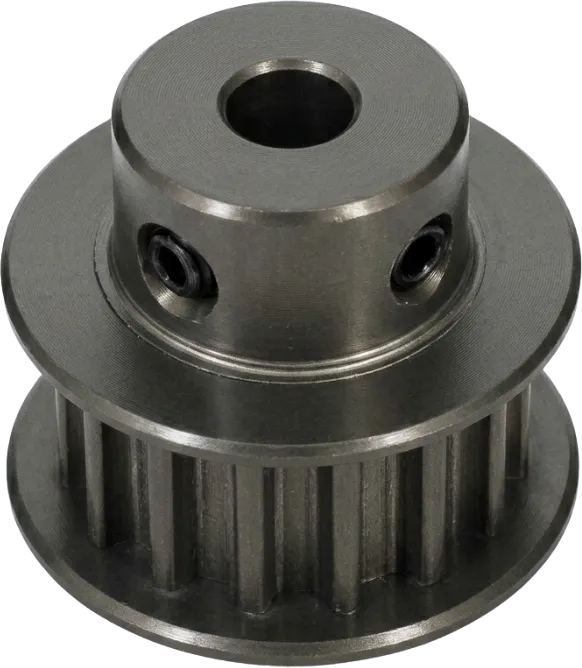
Undyed hardcoat anodizing with a natural dark gray appearance.
Hardcoat anodizing for aluminum components requiring improved wear resistance, surface hardness, electrical insulation characteristics, and surface durability in industrial operating environments.
Get DFM & Technical Assessment →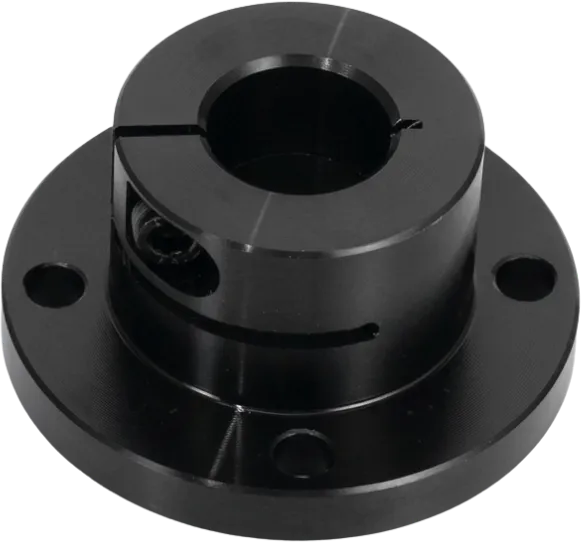
Type III hardcoat anodizing is commonly specified for CNC machined aluminum parts that require improved wear resistance, surface hardness, and durability in demanding operating environments.
Unlike painted coatings, anodizing preserves the metallic character of aluminum while adding a protective oxide layer to the surface. Type III builds that layer thicker and denser than Type II, so coating allowance and dimensional growth should be reviewed during machining and tolerance planning.
| Characteristic | Typical Information |
|---|---|
| Coating Type | Type III Hardcoat Anodizing |
| Commonly Referenced Specification | MIL-PRF-8625 Type III, subject to project-specific capability and requirement review. |
| Coating Thickness | Specified by the drawing or applicable process requirement. Any stated production range must be confirmed for the project. |
| Surface Hardness | Depends on alloy, coating thickness, sealing condition, and test method. Numeric hardness requirements should be specified and verified where required. |
| Electrical Insulation | Commonly improved compared with untreated aluminum. Application-specific dielectric performance requires separate evaluation. |
| Corrosion Resistance | May improve depending on alloy, coating thickness, sealing, surface condition, and operating environment. |
| Wear Resistance | Generally higher than Type II anodizing in suitable applications; actual performance depends on alloy, thickness, sealing, and test conditions. |
| Dimensional Growth | The coating penetrates the substrate and builds outward. A 50/50 split is a common Type III estimate, but machining allowance should be confirmed for the process and part. |
| Color | Natural coloration varies with alloy, coating thickness, and process conditions. Black requires a specified dyed or pigmented finish. |
*Actual coating properties and achievable thickness depend on alloy, geometry, coating specification, sealing, and processing conditions.
Undyed hardcoat anodizing with a natural dark gray appearance.
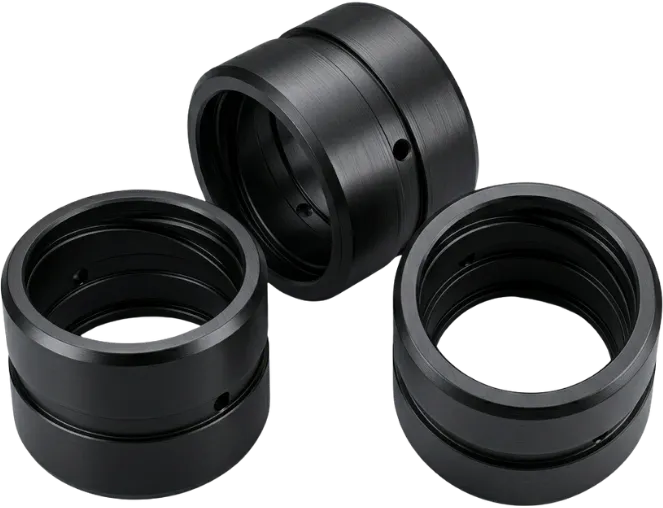
Dyed hardcoat anodizing used for appearance and reduced reflectivity requirements.
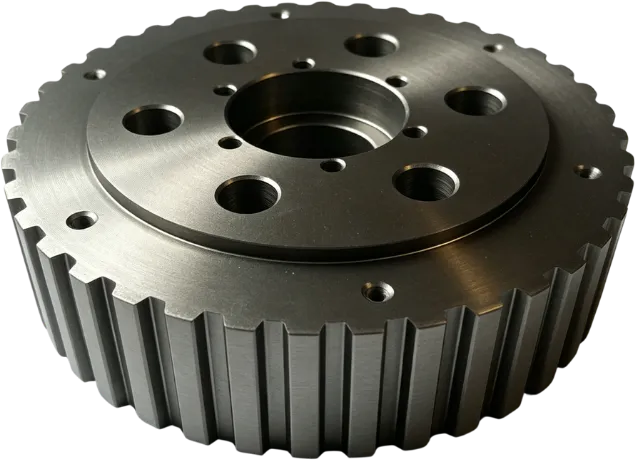
Typically specified where wear resistance and dimensional stability must be balanced.
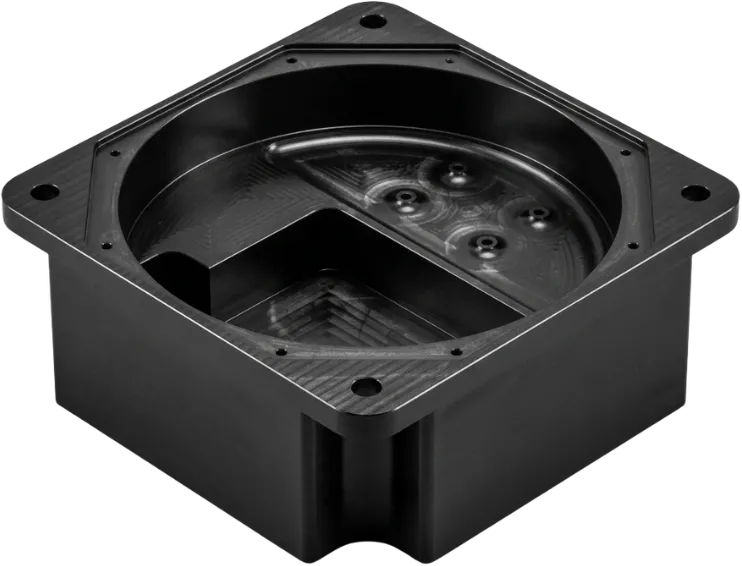
Specified for applications requiring improved abrasion resistance and surface durability, subject to material, coating thickness, and operating conditions.
Used where wear resistance and dimensional stability are required.
Selected for improved abrasion resistance and reduced surface wear.
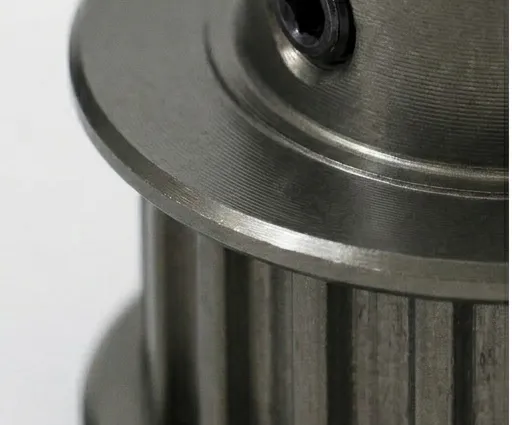
Used on suitable aluminum components where wear behavior, surface hardness, and dimensional allowance should be reviewed before finishing.
Used in demanding production and mechanical environments.
For CNC machined aluminum parts, anodizing is reviewed together with machining requirements rather than treated as an isolated finishing process.
*This helps reduce risks related to coating variation, dimensional change, and assembly fit.
Hardcoat anodizing produces a thicker oxide layer than Type II anodizing and may influence critical dimensions.
Part of the coating penetrates into the substrate while part grows outward from the surface.
Sharp edges may experience localized coating variation.
Coating appearance and achievable thickness may vary among aluminum alloys.
| Property | Type II | Type III |
|---|---|---|
| Thickness | Generally thinner | Generally thicker |
| Surface Hardness | Lower | Higher, depending on alloy and process |
| Wear Resistance | Lower | Generally higher in suitable applications |
| Color Options | Generally broader | More limited |
| Cost | Typically lower | Typically higher |
| Dimensional Impact | Generally lower | Generally higher |
*Actual results and process selection depend on alloy, coating specification, sealing, geometry, and application requirements.
Type III hardcoat anodizing produces a denser and thicker oxide layer primarily intended for wear resistance and functional protection.
Yes. Type III coatings produce measurable dimensional growth and should be considered during machining and tolerance planning.
Threads may be masked, machined with coating allowance, or otherwise managed according to fit and coating requirements. Re-tapping after anodizing should only be used when permitted because it removes the coating from contacted surfaces.
5xxx, 6xxx, and many 7xxx series alloys are commonly used. Final coating appearance and hardness may vary by alloy.
Process recommendations may vary based on part design, material grade, and end-use requirementsContact our engineering team for application-specific guidance.
Our team integrates CNC machining with Type III hardcoat anodizing requirements, including coating thickness, masking, critical dimensions, post-finish inspection, and production planning for custom aluminum components.
Get a Quote