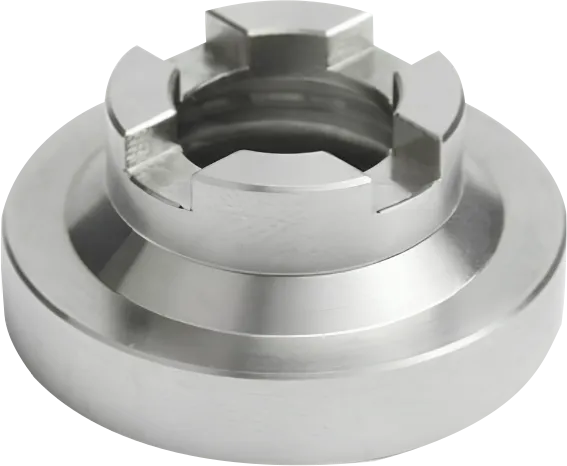
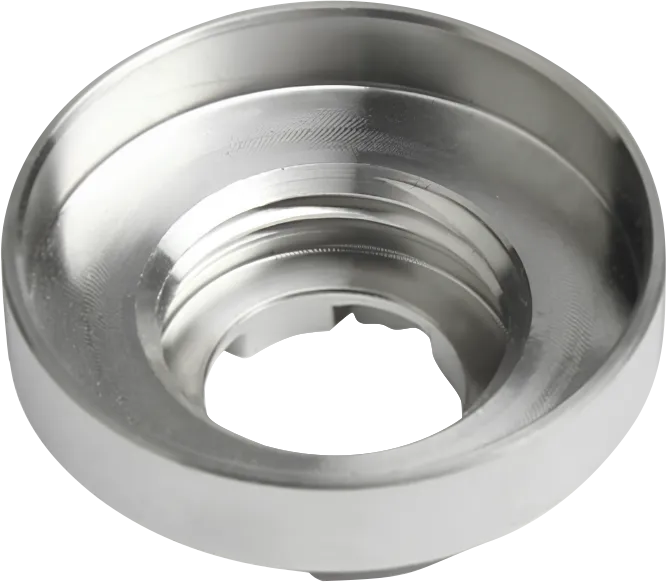
Titanium CNC Machining
Titanium CNC Machining for High-Strength Lightweight Components
CNC machining support for titanium components used in demanding engineering applications where strength-to-weight ratio, corrosion resistance, and material performance are important.
Titanium is selected for its high strength-to-weight ratio, corrosion resistance, and performance in demanding engineering environments.
Get a QuoteWhy Choose Titanium
Titanium is selected when engineering requirements exceed the capability of conventional metals.
Superior Strength-to-Weight
High strength-to-weight ratio for weight-sensitive engineering applications.
Extreme Environment Resilience
Good corrosion resistance in suitable environments, subject to grade, exposure conditions, and application review.
Enhanced Fatigue Resistance
High fatigue resistance under cyclic loading.
Structural Optimization
Suitable for supporting strength-to-weight design goals when part geometry, load conditions, and machining requirements are properly reviewed.
Application Requirement Review
Material suitability for demanding applications should be reviewed according to project-specific requirements.





Titanium is often considered when performance requirements are demanding and material selection must be reviewed carefully.
Common Titanium Grades
Grade 2 (Commercially Pure Titanium)
High corrosion resistance, lower strength.
Used for corrosion-resistant industrial components and heat-transfer related components requiring material review.
Grade 5 (Ti-6Al-4V)
High strength + fatigue resistance.
Common high-strength titanium alloy for demanding industrial applications.
Grade 23 (Ti-6Al-4V ELI)
Extra low interstitial content.
Often associated with applications requiring strict material control; project-specific requirements should be reviewed separately before material selection.
Titanium Grade Comparison
Titanium grades are selected based on strength requirements, corrosion resistance, and machinability trade-offs. Unlike aluminum or steel, titanium performance is highly dependent on alloy composition.
| Grade | Strength | Machinability | Corrosion Resistance | Typical Applications |
|---|---|---|---|---|
| Grade 2 (Commercially Pure Titanium) | Moderate strength | Good machinability | Excellent corrosion resistance | Corrosion-resistant industrial components and heat-transfer related components requiring material review |
| Grade 5 (Ti-6Al-4V) | High strength | Moderate machinability | Excellent corrosion resistance | High-strength lightweight components |
| Grade 23 (Ti-6Al-4V ELI) | High strength (improved purity) | Moderate machinability (more sensitive) | Good corrosion resistance; suitability should be reviewed based on material requirements and application conditions. | Material-critical components requiring review |
Surface Finishing Considerations for Titanium
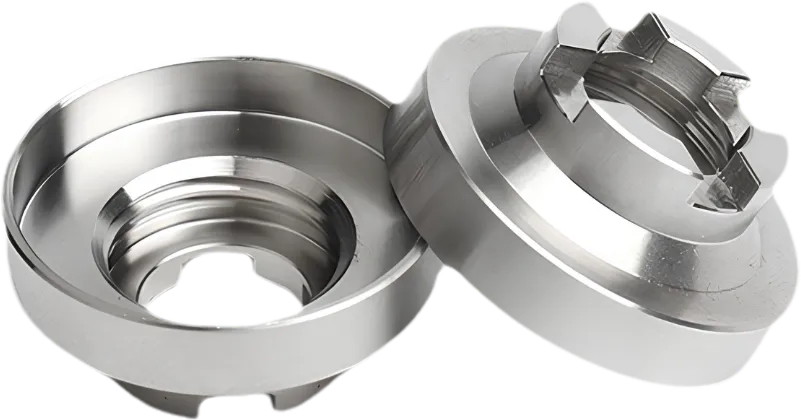
Unlike most engineering metals, titanium naturally forms a stable oxide layer that provides inherent corrosion resistance.
Surface treatments are therefore used primarily for functional enhancement, surface consistency, or performance tuning, rather than basic protection.
Compatible Surface Finishes
| Finish Type | Primary Purpose | Engineering Effect | Typical Use Context |
|---|---|---|---|
| Anodizing → | Surface color coding + corrosion enhancement | Does not significantly improve structural strength | Part identification, decorative components |
| Mechanical Polishing | May help reduce surface irregularities and improve surface smoothness for fatigue-sensitive designs | Reduces micro-stress concentration | Fatigue-sensitive or precision mechanical components requiring surface condition review |
| Passivation → | Enhances natural oxide layer stability | Supports oxide-layer stability and corrosion performance depending on application requirements | Corrosion-sensitive industrial components depending on exposure conditions |
| Bead Blasting | Uniform matte surface finish | Improves surface consistency and friction control | Functional mechanical parts |
CNC Machining & Engineering Considerations
Titanium presents significant machining challenges due to its low thermal conductivity, high strength, and tendency to generate heat at the cutting interface. These characteristics benefit from controlled machining strategies and careful process planning to help support dimensional accuracy and tool stability.
Machining Behavior
Heat is concentrated at the cutting zone due to low thermal conductivity
Typically benefits from controlled cutting parameters to reduce tool degradation risk
Tool wear is significantly higher compared to aluminum and stainless steel
Often benefits from coated carbide or application-specific cutting tools
Material has a tendency to work-harden during machining
Typically benefits from stable feed rates and optimized tool engagement
Rigid fixturing is typically important for reducing vibration and deformation risk
Essential for maintaining dimensional accuracy
Process & Manufacturing Impact
Slower cutting speeds are commonly used compared with many steels and aluminum alloys
Necessary to control heat generation and tool wear
Tool material selection is critical for machining stability
Coated carbide tools are typically recommended
Coolant strategy directly impacts tool life and surface quality
Coolant strategy should be reviewed to help control heat, tool wear, and machining stability
Chip evacuation must be actively controlled
Poor chip removal can lead to heat accumulation and surface damage
Production & Tolerance Considerations
Tight tolerance requirements should be reviewed based on part geometry, machining strategy, and process stability
Requires stable machining environment and controlled parameters
Thin-wall structures carry high deformation risk
Design modifications may be required for manufacturability
Thermal expansion must be accounted for in process planning
Impacts final dimensional accuracy
Process stability is critical to achieving repeatable part quality
Small deviations can significantly affect final results



Engineering Interpretation
Titanium machining risk is not uniform — it is process-dependent and geometry-sensitive.
Higher risk levels directly impact:
- Production cost
- Tooling strategy
- Cycle time
- Achievable tolerances
- Manufacturing feasibility





Design Recommendation
To reduce manufacturing risk, the following design strategies are recommended:
- Avoid unnecessary thin-wall structures
- Maintain stable machining geometry wherever possible
- Allow sufficient tool access for complex features
- Consider thermal effects in tolerance design
- Optimize part orientation for machining stability
Typical Applications
- Weight-sensitive mechanical components
- Corrosion-resistant components
- High-performance industrial components
- Precision mechanical parts requiring careful material review
Material Selection Framework
When Titanium Is a Good Choice
- When weight reduction + strength are both critical
- When corrosion resistance is important in suitable operating environments
- When material performance requirements are demanding and should be reviewed carefully before production
When to Avoid Titanium
- When cost is a primary constraint
- When aluminum or stainless steel can meet performance requirements
- When high-volume low-cost production is required
Engineering Trade-offs
- Performance vs machining cost
- Weight reduction vs manufacturing complexity
- Corrosion resistance vs tool wear impact
- Structural reliability vs production efficiency
Engineering Support
Titanium provides a high strength-to-weight ratio and good corrosion resistance, but machining requires careful control of heat, cutting forces, and tool wear.
Our engineering team can assist with:
Material Selection Guidance
Strength-to-weight balance, fatigue requirements, operating environment, and project-specific documentation or qualification requirements.
Design for Manufacturability (DFM)
Thin-wall risk, geometry stability, tool access, and deformation sensitivity.
CNC Machining Feasibility
Tool wear risk, heat control, cutting strategy, and production stability.
Surface Finishing Recommendations
Functional performance, fatigue sensitivity, corrosion resistance, application needs.
Production Planning Support
Batch size optimization, cycle time, machining strategy, cost efficiency.






Frequently Asked Questions
Why is titanium difficult to machine?
Titanium generates high heat during cutting and causes accelerated tool wear due to low thermal conductivity and high strength.
What is the most commonly used titanium grade?
Grade 5 (Ti-6Al-4V) is commonly used due to its balance of strength and machinability.
Is titanium stronger than steel?
Titanium has a higher strength-to-weight ratio, but steel can have higher absolute strength depending on grade.
What industries use titanium CNC parts?
Marine, high-performance industrial, and weight-sensitive engineering applications.
Is titanium suitable for mass production?
It is generally less cost-efficient for high-volume production due to machining complexity and material cost.
Need Titanium CNC Machined Components?
Whether you are evaluating material options, developing prototypes, or preparing for production, our team can help review component requirements and recommend suitable manufacturing solutions.
Get a Quote